ROLE · User Experience Designer | CATEGORY · Healthcare | TIMELINE · 8 Weeks

Problem
More than 25 million people in the United States have limited English proficiency. After discharge, these patients may receive prescriptions, lab results, and follow-up instructions in a language they cannot fully understand. Misunderstanding this information can lead to missed doses, unsafe medication use, and avoidable readmissions.
MyChart centralizes medical records, but accessing information is not the same as understanding it. Direct translation can explain that a medication should be taken twice daily, but it may not explain what the medication treats, what it interacts with, or when a side effect requires immediate care.
Initial testing revealed four unanswered questions: what a medication treats, how it should be taken, what foods or drugs to avoid, and when a symptom requires urgent care.
Research Insights
We moderated usability sessions with six limited-English-proficiency Spanish speakers. Participants were recruited through community organizations and personal networks and completed a mock post-discharge task in MyChart.
Four principles guided every decision in the extension:
Translation did not create trust.
Participants translated the same sentence multiple times because they had no way to confirm whether the translation was medically accurate.
MyChart was only a starting point.
All six participants left the app to search Google or use Google Translate. MyChart provided the information, but not enough context to understand it.
Task completion did not mean comprehension.
Participants could repeat how often to take a medication but could not explain what it treated or what to do if symptoms appeared.
Safety information was the largest gap.
Participants could not identify interactions, warning signs, or when they should seek emergency care. Many accepted partial understanding because they had no better option.
What the First Version Got Wrong
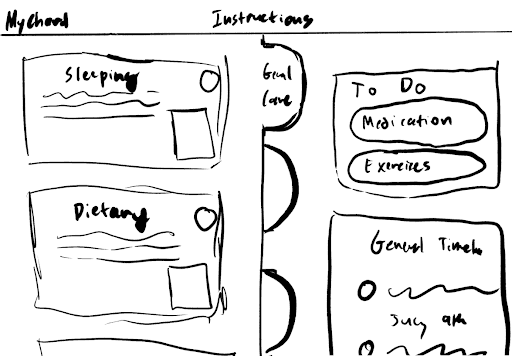
Our first concept placed a translate button beside each instruction. It provided a direct translation without adding medical context.
During testing, participants continued translating the same lines in other tools. Making translation faster did not help them confirm whether the information was correct or understand what it meant for their recovery.
We removed the translation only approach and rebuilt the extension around comprehension and verification.
Iterations


Solution
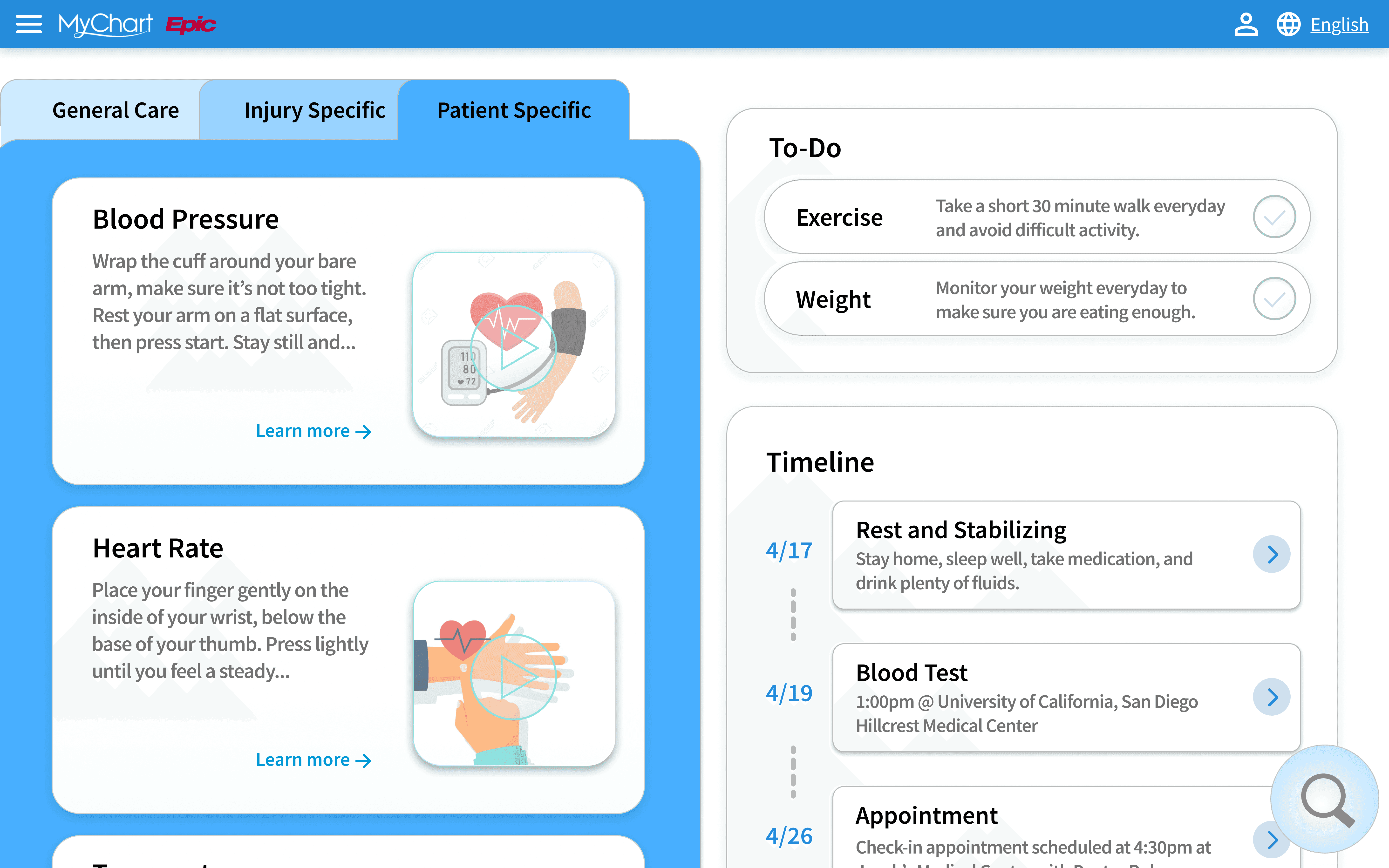
The redesigned extension replaces auto-translate alone with four layers of support directly inside MyChart:
English Version




Spanish Version


In the baseline experience, all six participants left MyChart to use Google Translate at least once.
These findings are an early signal of behavior change, not a validated clinical outcome.
Reflection
This project showed me that translation alone does not create understanding. The clearest example was a participant who translated the same sentence several times because she had no way to know whether the result was trustworthy.
That behavior changed how we evaluated the experience. We stopped asking only whether patients could complete the task and started asking whether they understood the information well enough to act on it safely.
Other projects


© 2026 Jeffrey Liang